

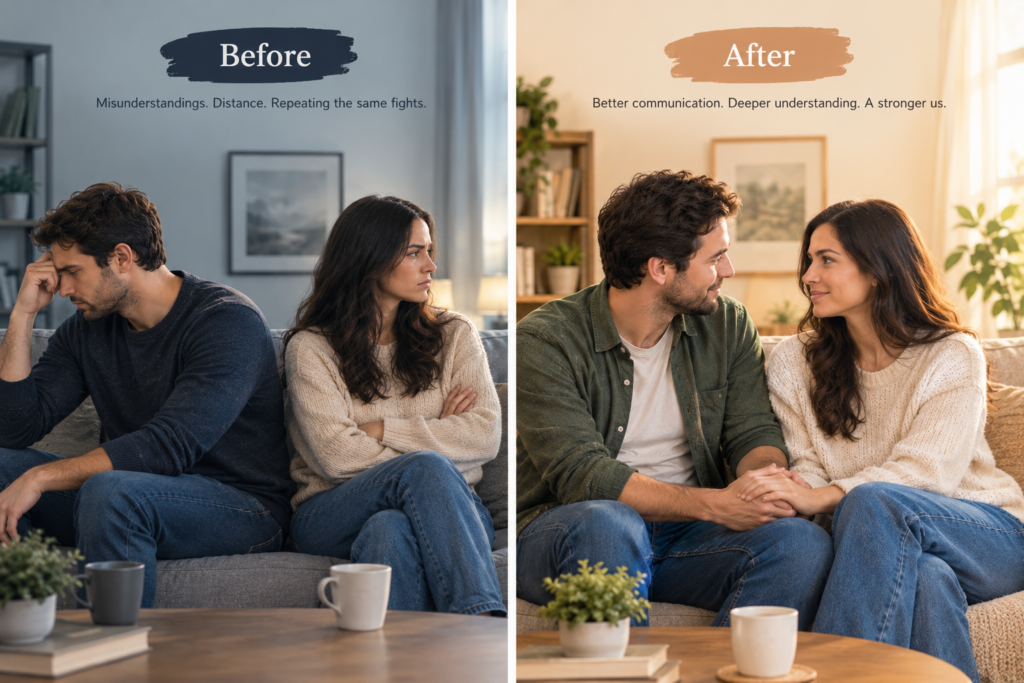
Have you ever felt miles apart from your partner, even while sitting right next to them on the couch? You still love each other, but something feels off. Maybe the same argument keeps circling back. Maybe conversations feel tense, short, or avoided altogether. That quiet distance can be confusing and painful, especially when you both genuinely care.
Here’s the good news: emotional disconnection does not mean your relationship is broken! Often, it simply means your communication patterns need a little guidance. Emotionally Focused Therapy, or EFT, is a warm, research-backed approach that helps couples rebuild closeness, understand each other’s needs, and feel like a team again.
In this guide, we’ll explain what EFT is, the communication traps that create distance, how sessions actually work, and how to know when it’s time to reach out for support.

What Is Emotionally Focused Therapy (EFT) for Couples?
Emotionally Focused Therapy is a structured, compassionate type of couples therapy that focuses on the emotional bond between partners. Instead of just teaching conversation “rules,” EFT helps you understand the deeper feelings driving your conflicts, so you can reconnect in a real and lasting way.
How Does Emotionally Focused Therapy Work?
EFT works by gently uncovering the emotions hiding beneath your arguments. A frustrated comment often masks a softer feeling, like loneliness or fear of being unimportant. Your therapist helps you name those feelings, share them safely, and respond to each other with warmth rather than defensiveness.
What Is the Main Goal of EFT for Couples?
The main goal is to create a secure emotional connection. When you both feel safe, understood, and valued, conflict becomes easier to handle, and closeness returns naturally. Think of it as rebuilding the foundation that keeps your relationship steady.
How EFT Helps Couples Understand Their Emotional Needs
We all carry needs for comfort, reassurance, and belonging. EFT shines a light on these needs so you can express them clearly instead of through criticism or silence. Once you understand what you’re really asking for, it’s so much easier to ask for it kindly.
Is EFT Different From Traditional Couples Therapy?
Yes! While many approaches focus mainly on communication skills or problem-solving, EFT goes a step deeper into the emotional bond itself. It’s less about “winning” a conversation and more about feeling connected, safe, and heard.
Simply put: EFT helps you reconnect emotionally, not just communicate better.
What Are the Most Common Communication Problems in Relationships?
Communication troubles rarely start with big dramatic moments. They build slowly, through small misunderstandings and repeated patterns. Let’s look at the most common ones.
Why Do Couples Keep Having the Same Argument?
Ever notice how one tiny disagreement about dishes turns into the exact same fight you had last month? That’s because the surface topic isn’t the real issue. Underneath, you may both be feeling unheard or unappreciated, and until those feelings get addressed, the argument keeps returning.
How Miscommunication Can Create Emotional Distance
When messages get misread, hurt builds up. One partner feels ignored, the other feels criticized, and slowly you stop sharing. That growing silence can feel like distance, even when love is still very much there.
What Happens When One Partner Shuts Down During Conflict?
Sometimes one partner goes quiet or walks away. This isn’t always avoidance for its own sake, it’s often a way of coping with overwhelm. Unfortunately, shutting down can leave the other partner feeling abandoned, which only increases the tension.
Why Criticism, Defensiveness, and Blame Can Damage a Relationship
Criticism invites defensiveness, and blame invites counter-blame. Round and round it goes! Over time, these habits chip away at trust and make it harder to feel like partners on the same side.
The takeaway: most communication problems are patterns, not personal failings, and patterns can change.
3 Common Communication Traps That Can Hurt a Relationship
Let’s break down three traps many couples fall into, plus how EFT helps you climb out.
Communication Trap #1: The Criticism-and-Defensiveness Cycle
How Criticism Can Trigger Defensiveness
When a conversation starts with “You never…” or “You always…,” the other person naturally gets defensive. Instead of hearing the hurt behind the words, they focus on protecting themselves. Nobody feels understood, and the real need stays hidden.
How Couples Can Break the Blame Cycle
Try swapping blame for honesty about your feelings. Instead of “You never help,” try “I feel overwhelmed and I’d love support.” EFT helps you practice this shift so your partner can hear you, not just brace for impact.
Communication Trap #2: Pursuing and Withdrawing
Why One Partner May Push for Connection While the Other Pulls Away
In many couples, one partner pushes for closeness and answers, while the other retreats to calm down. The more one pursues, the more the other withdraws, and vice versa. It’s an exhausting dance with no winner.
How EFT Helps Couples Break the Pursue-Withdraw Pattern
EFT helps both partners see the pattern clearly, without pointing fingers. You learn that the pursuer often feels scared of disconnection, and the withdrawer often feels afraid of failing. Understanding that softens everything and opens the door to reconnection.
Communication Trap #3: Avoiding Difficult Conversations
Why Avoiding Conflict Does Not Always Resolve Relationship Problems
Keeping the peace by staying silent might feel safer, but unspoken feelings don’t disappear. They pile up quietly until they spill over, often at the worst moment.
How Couples Can Learn to Discuss Difficult Emotions Safely
EFT creates a calm, supportive space to talk about hard things a little at a time. With your therapist guiding the conversation, those scary topics become a lot more manageable, and even connecting.
Remember: naming the trap is the first step to escaping it together.
How Does EFT Help Couples Reconnect Emotionally?
Reconnection isn’t about grand gestures. It’s about feeling safe and seen with each other again. Here’s how EFT makes that happen.
How EFT Builds Emotional Safety and Trust
EFT helps you lower your guard by slowing conversations down and keeping them gentle. When you both feel safe, you can be honest without fear, and trust begins to grow again.
How Couples Learn to Express Their Needs More Clearly
Instead of hinting, hoping, or exploding, you learn to say what you need directly and kindly. “I need to feel close to you tonight” lands so much better than frustrated silence!
How EFT Helps Partners Respond to Each Other With Greater Understanding
As you understand the feelings behind each other’s reactions, compassion replaces defensiveness. You start responding to your partner’s heart, not just their words.
Can EFT Help Couples Feel Close Again After Years of Conflict?
Absolutely. Even couples who’ve felt stuck for years can rebuild warmth and intimacy. It takes patience and willingness, but connection can return, often stronger than before.
Bottom line: EFT turns conflict into an opportunity for closeness.
What Relationship Problems Can Couples Therapy Help With?
Wondering if your situation “counts”? Couples therapy supports a wide range of challenges.
Couples Therapy for Communication Problems
If talking turns into arguing (or avoiding), therapy gives you tools and a safe space to truly hear each other.
Couples Therapy for Emotional Disconnection
Feeling like roommates instead of partners? Therapy helps rekindle emotional intimacy and closeness.
Couples Therapy for Repeated Arguments and Conflict
When the same fights keep repeating, therapy helps you find the real root and finally move past it.
Couples Therapy for Trust and Relationship Challenges
Trust can be rebuilt. Therapy offers a steady, supportive path toward healing and security.
Can Couples Therapy Help Before a Relationship Reaches a Crisis?
Yes, and earlier is wonderful! You don’t have to wait for a breaking point. Therapy is just as powerful for strengthening a good relationship as it is for repairing a struggling one.
In short: wherever you are, support is available.
What Are the Benefits of Emotionally Focused Couples Therapy?
Let’s look at the rewards you can expect when you invest in this journey together.
Improved Communication Between Partners
You’ll learn to talk openly and listen deeply, so conversations feel productive instead of painful.
Greater Emotional Connection and Intimacy
As safety grows, so does closeness. Many couples rediscover the warmth and affection they’d been missing.
Better Understanding of Each Partner’s Needs
You’ll gain real insight into what your partner feels and needs, and they’ll understand you too.
Healthier Ways to Handle Conflict
Disagreements will always happen, but EFT teaches you to navigate them with calm and care rather than escalation.
Building a More Secure and Supportive Relationship
Ultimately, EFT helps you become a true team, ready to face life’s ups and downs side by side.
The reward: a relationship that feels safe, connected, and resilient.
How Do You Know When Your Relationship May Need Couples Therapy?
Not sure if it’s time? Here are a few gentle signs worth noticing.
You Keep Having the Same Arguments
If one topic keeps resurfacing without resolution, therapy can help you finally address the real issue underneath.
You Feel Emotionally Distant From Your Partner
When closeness fades and you feel more like strangers, that distance is worth tending to.
Communication Has Become Difficult or Avoidant
If you dodge certain topics or feel misunderstood often, support can reopen those conversations safely.
You Struggle to Resolve Conflict Without Escalating
When small disagreements quickly turn big, therapy offers calmer ways to work things through.
You Want to Improve Your Relationship Before Problems Become More Serious
Being proactive is a sign of strength! Seeking help early keeps little cracks from becoming big ones.
The message here: noticing these signs is a loving step, not a failure.
Does Couples Therapy Work Even If Only One Partner Wants Help?
What if you’re ready but your partner isn’t quite there yet? Don’t worry, there’s still hope.
What If My Partner Is Reluctant to Attend Couples Therapy?
Reluctance is common and completely understandable. Many partners feel nervous at first, then warm up once they realize therapy is supportive, not about assigning blame.
Can One Partner Start Therapy and Still Improve the Relationship?
Yes! When one person learns new ways to communicate and respond, the whole dynamic can shift. Positive change in one partner often inspires change in the other.
How Therapists Can Help Both Partners Feel Heard and Understood
A skilled therapist stays neutral and caring, making sure both voices matter equally. That balance helps even hesitant partners feel safe and respected.
Takeaway: starting somewhere is always better than waiting.
What Happens During an Emotionally Focused Couples Therapy Session?
Curious about what sessions actually look like? Here’s a friendly peek inside.

Identifying Negative Relationship Patterns
First, your therapist helps you spot the repeating cycles that cause tension, so you can see the pattern as the problem, not each other.
Exploring Emotional Needs and Attachment
Next, you’ll gently explore the deeper feelings and needs beneath those patterns, like a desire for closeness, reassurance, or respect.
Learning New Ways to Respond to Each Other
Then, you’ll practice responding with openness and compassion, turning old reactions into new, connecting ones.
Creating More Secure Emotional Connection
Finally, you’ll build those warm, bonding moments that make your relationship feel safe and strong again.
In short: each session moves you a little closer, step by step.
How to Find Couples Therapy or EFT Near You
Ready to take a look at your options? Here’s how to find the right fit.
What Should You Look for in a Couples Therapist?
Look for someone warm, experienced, and nonjudgmental, a professional who makes you both feel comfortable and respected from the very first conversation.
Is Your Therapist Trained in Emotionally Focused Therapy?
Since EFT is a specialized approach, ask whether your therapist has training and experience in it. The right expertise makes a real difference.
What Questions Should You Ask Before Booking a Couples Therapy Consultation?
Consider asking about their experience with EFT, how sessions are structured, scheduling flexibility, and whether they accept your insurance. A quick consultation can answer so much!
How to Find Couples Therapy in Louisiana, Texas, Florida, and Nevada
To find couples therapy in Louisiana, Texas, Florida, and Nevada, search local directories, ask your doctor for a referral, or reach out to nearby practices directly. Many offer a friendly consultation so you can see if it feels right.
Online vs. In-Person Couples Therapy: Which Option Fits Your Needs?
Both work beautifully! In-person sessions offer a cozy, focused space, while online therapy adds flexibility for busy schedules. Choose whatever helps you both show up consistently.
Remember: the best therapist is one you both feel comfortable with.
Frequently Asked Questions About EFT and Couples Therapy
What is Emotionally Focused Therapy for couples?
It’s a compassionate, research-backed therapy that helps partners understand their emotions, strengthen their bond, and reconnect.
What does EFT do for relationships?
EFT builds emotional safety, improves communication, and helps couples feel close and secure again.
Can EFT help with communication problems?
Yes! EFT addresses the feelings behind communication struggles, making conversations warmer and more productive.
How long does couples therapy usually take?
It varies by couple, but many people see meaningful progress within several months of consistent sessions.
Can couples therapy rebuild emotional connection?
Absolutely. Rebuilding closeness is one of the main goals of EFT, even after long periods of distance.
Is EFT effective for couples who argue frequently?
Very much so. EFT helps you understand why arguments keep happening and gives you healthier ways to handle conflict.
Can EFT help couples who feel emotionally disconnected?
Yes. Reconnecting emotionally distant partners is one of EFT’s greatest strengths.
What should couples expect from their first therapy session?
Expect a welcoming, pressure-free conversation where you share your story and goals, and begin to feel heard.
How do I know if couples therapy is right for my relationship?
If you want more connection, better communication, or help with conflict, it’s likely a great fit. Reaching out is a loving first step.
Reconnect With Your Partner Through Couples Therapy
Feeling disconnected doesn’t mean the love is gone, it simply means your relationship is ready for a little care and support. With Emotionally Focused Therapy, you can rebuild trust, communicate with warmth, and feel like true partners again. You deserve a relationship that feels safe, close, and joyful!

Take the First Step Toward a Healthier Relationship
Change begins with one small, hopeful decision. Choosing to seek support shows how much your relationship matters to you both.
Book a Couples Therapy Consultation
Reach out today to schedule a friendly, no-pressure consultation. It’s the perfect way to ask questions, explore your options, and see if EFT feels right for you.
Get Support for Communication, Connection, and Relationship Challenges
Whether you’re navigating repeated conflict, emotional distance, or simply want to grow closer, compassionate help is available. Take that first step, and start reconnecting with your partner today!