
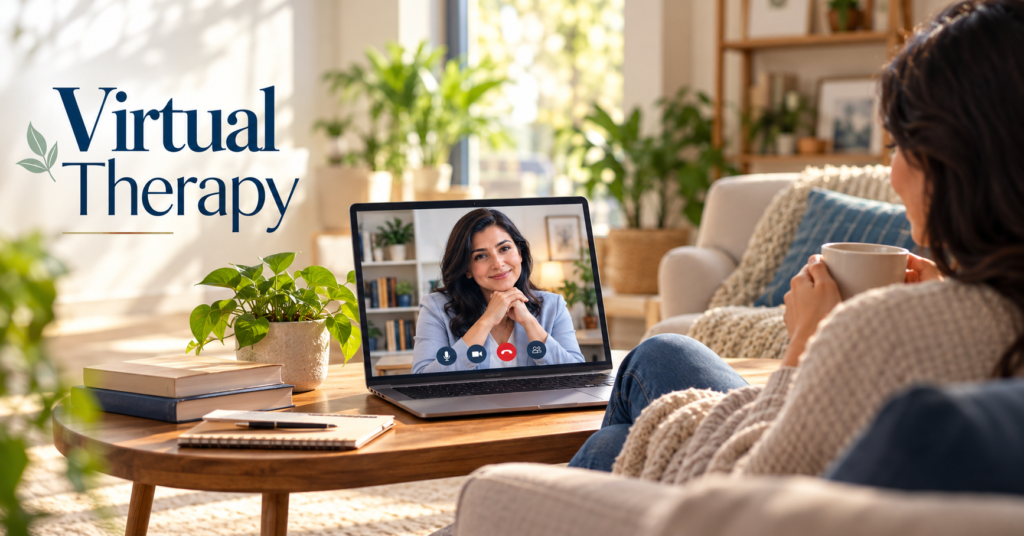
Finding support that fits your life shouldn’t feel like one more impossible task on your to-do list. Virtual therapy makes it easier to connect with a caring counselor from the comfort of your own home, on a schedule that actually works for you. This guide walks you through how online counseling works, why it’s effective, and how to find the right therapist in Texas, Florida, Nevada, or Louisiana. We’ll also explore the special benefits of bilingual Russian-English counseling. By the end, you’ll feel confident and ready to take that first supportive step!
What Is Virtual Therapy and How Does Online Counseling Work?
Virtual therapy is simply counseling that happens over a secure video call, phone, or messaging platform instead of in a traditional office. You get the same thoughtful, professional care, just delivered in a way that fits your real, busy life.
How Does Virtual Therapy Work From Home?
You log in to a private, encrypted video session at your scheduled time, usually through a secure link your therapist sends you. Find a quiet, comfortable spot, pop in some headphones, and you’re ready to go! It’s warm, personal, and surprisingly easy once you’ve done it once.

Is Virtual Therapy as Effective as In-Person Therapy?
Yes! Research consistently shows that virtual therapy can be just as effective as in-person sessions for many common concerns, like anxiety, stress, and relationship struggles. What matters most is the connection between you and your counselor, and that bond thrives on screen too.
Who Can Benefit From Virtual Counseling?
Parents juggling packed days, professionals with unpredictable schedules, couples looking to reconnect, and anyone who values privacy can all benefit. If you’ve been putting off support because life feels too full, virtual counseling may be exactly the flexible, supportive option you need.
Quick takeaway: Virtual therapy brings professional, compassionate care to you, wherever you feel most comfortable.
What Are the Benefits of Virtual Therapy?
The perks go far beyond skipping the commute. Here’s what makes online counseling so appealing for families and individuals alike.
How Does Virtual Therapy Make Counseling More Convenient?
No traffic, no waiting rooms, no scrambling for parking! You simply open your laptop or phone and you’re there. That saved time adds up fast, leaving more room for the people and things you care about.
Can Online Therapy Help People Who Have Difficulty Traveling to Appointments?
Absolutely. For anyone managing mobility challenges, chronic illness, or a lack of reliable transportation, virtual therapy removes a huge barrier. Support comes to you, so getting help never depends on getting out the door.
Does Virtual Therapy Provide More Privacy and Comfort?
Many people feel more at ease opening up from their own space, wrapped in a favorite blanket with a cup of tea nearby. There’s no lobby, no running into neighbors, and no awkwardness. Just you and your counselor in a comforting, private setting.
How Can Virtual Therapy Make It Easier to Talk About Difficult Topics?
Being in your own environment often helps you feel safer and more grounded. That comfort can make it easier to share the hard stuff, the feelings you’ve been holding onto, and the worries you haven’t said out loud yet.
Is Virtual Therapy a Good Option for Busy Professionals, Parents, and Couples?
It’s a wonderful fit! A parent can fit a session in during nap time. A professional can log on during a lunch break. Couples can meet together even when one partner is traveling. Flexible, family-focused therapy meets you where you are.
Quick takeaway: Convenience, comfort, and privacy make virtual therapy an easy “yes” for busy lives.
Why Does Speaking Your Native Language in Therapy Matter?
Words carry emotion, memory, and nuance. When you can speak in the language your heart knows best, therapy becomes richer and more honest.
Can Speaking Your Native Language Help You Express Emotions More Clearly in Therapy?
Yes, and it can make a world of difference! Emotions often live in our first language. Speaking it lets you describe feelings with the exact shade of meaning you intend, without translating in your head first.
Why Can Some Feelings Be Easier to Explain in Your First Language?
Childhood memories, family dynamics, and deep emotions are often stored in the language you grew up with. Explaining them in that same language feels natural and complete, rather than squeezed into an imperfect translation.
What Are the Benefits of Russian-English Counseling?
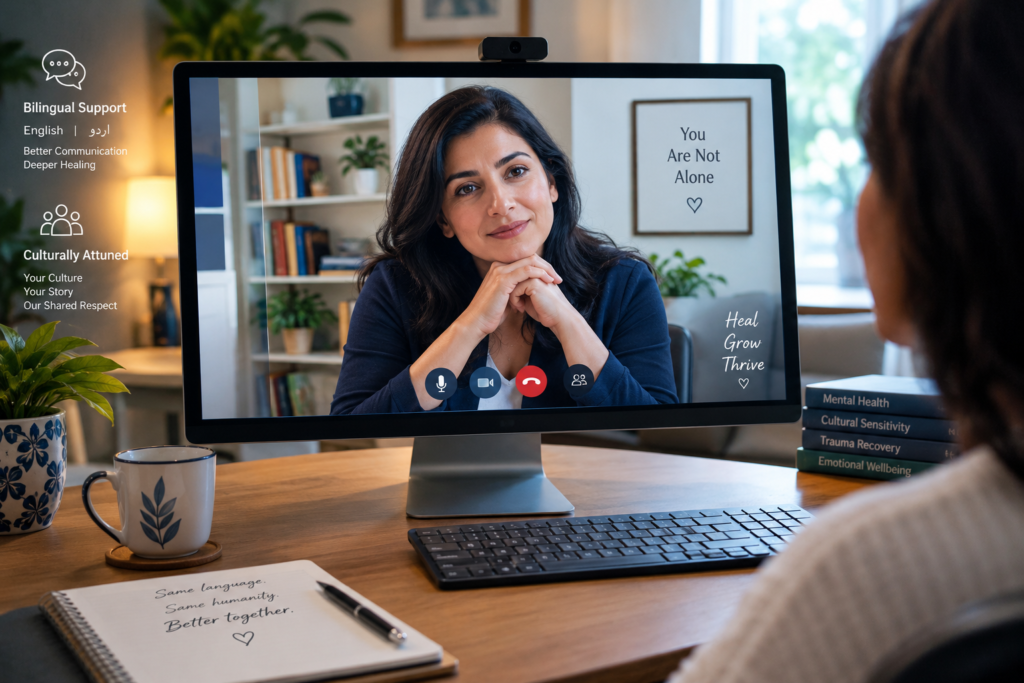
Bilingual counseling lets you move freely between Russian and English, choosing whichever fits the moment. You never have to pause your healing to search for the “right” word in a second language.
How Can Russian-English Therapy Help Bilingual Clients Communicate Complex Experiences?
A bilingual counselor understands cultural context along with language. They grasp the meaning behind a phrase, a proverb, or a family tradition, so nothing gets lost. That deeper understanding builds real trust.
Can Clients Switch Between Russian and English During a Therapy Session?
Yes! You can flow between both languages naturally, exactly as you might at home. Your counselor follows right along, keeping the conversation smooth and supportive.
What Is the Difference Between Bilingual Therapy and Therapy Through an Interpreter?
With bilingual therapy, you speak directly to your counselor, with no middle step. An interpreter, by contrast, adds a third person and can dilute emotional nuance. Direct connection feels warmer, more private, and far more personal.
Quick takeaway: Speaking your native language helps you feel truly understood, and that’s where real healing begins.
How Do You Choose the Right Virtual Therapist or Counselor?
The right fit makes all the difference. Here’s how to find a counselor who feels like the right match for you.
What Should You Look for in an Online Counselor?
Look for someone warm, experienced, and genuinely focused on your goals. Consider their specialties, their approach, and whether they offer the flexible scheduling your family needs.
Why Does a Therapist’s State License Matter for Online Therapy?
Therapists must be licensed in the state where you are physically located during sessions. So if you live in Texas, your counselor needs a Texas license. This protects you and ensures your care meets professional standards.
What Should You Ask a Counselor Before Your First Virtual Therapy Session?
Try these helpful questions:
- What is your experience with concerns like mine?
- What therapy approach do you use?
- Do you offer flexible or evening appointments?
- Do you accept my insurance?
- Can we work in both Russian and English?
How Do You Know if a Russian-English Therapist Is Right for You?
Notice how you feel after a first conversation. Do you feel heard, comfortable, and understood in both languages? That sense of ease is a wonderful sign you’ve found a good match.
Where Can You Find Virtual Therapy in Texas, Florida, Nevada, and Louisiana?
Great news: virtual therapy is widely available across all four states! Here’s what to keep in mind for each.
What Should You Know About Finding a Virtual Counselor in Texas?
Make sure your counselor holds a current Texas license. Texas’s size makes online therapy especially valuable, connecting you with great care even in smaller towns.
How Can Texas Clients Find a Russian-English Virtual Counselor?
Search specifically for bilingual providers licensed in Texas, and ask directly whether sessions can be held in Russian, English, or both.
What Should Florida Clients Consider When Choosing Online Therapy?
Confirm Florida licensure and look for a counselor whose availability matches your rhythm. Flexible scheduling is a gift for Florida’s many busy families and professionals.
Is Russian-English Online Counseling Available for Clients in Florida?
Yes! Florida’s diverse communities mean bilingual counselors are available. Just ask about Russian-English sessions when you reach out.
How Can Clients in Nevada Find the Right Virtual Counselor?
Choose a Nevada-licensed therapist and prioritize the specialties and personality that feel right to you. Virtual care easily reaches clients across the state.
Who Can Benefit From Russian-English Counseling in Nevada?
Russian-speaking individuals, couples, and families who want to feel fully understood can all benefit. Speaking your native language adds comfort and clarity to every session.
What Should Louisiana Clients Look for in a Virtual Therapist?
Verify Louisiana licensure and seek a counselor who offers the supportive, flexible care your family deserves.
How Can Russian-English Counseling Help Louisiana Clients?
For Russian-speaking Louisianans, bilingual counseling means expressing your full story without barriers, in whichever language feels most natural.
Quick takeaway: In all four states, look for proper licensure plus the bilingual support you want.
Is Virtual Therapy Right for Everyone?
Virtual therapy is wonderful, but it’s good to know when other options may serve you better.
When Might In-Person Therapy Be More Appropriate?
Some situations, like certain complex conditions or specialized treatments, may benefit from in-person care. A counselor can help you decide what’s best during an initial conversation.
When Should You Consider Speaking With a Mental Health Professional Immediately?
If you’re experiencing a crisis or thoughts of harming yourself, please reach out for immediate help. In the U.S., call or text 988 to reach the Suicide and Crisis Lifeline, available 24/7. You deserve support right away.
What Should You Expect During Your First Virtual Therapy Session?
First sessions can feel exciting and a little nerve-wracking, and that’s completely normal! Here’s what to expect.
What Happens Before Your First Online Counseling Appointment?
You’ll usually fill out a few forms and receive a secure link. Take a moment to test your connection and settle into a quiet, comfortable space.
What Happens During a Virtual Therapy Session?
Your counselor will warmly welcome you, learn about your goals, and begin building a plan together. There’s no pressure, just a supportive conversation at your pace.
How Can You Prepare for Your First Online Therapy Session?
Jot down a few things you’d like to talk about, grab a glass of water, and find a private spot where you won’t be interrupted.
What Technology Do You Need for Virtual Therapy?
Just a device with a camera and microphone, a stable internet connection, and headphones for extra privacy. That’s it!
How Can You Tell if an Online Therapist Is Qualified?
A little homework upfront brings real peace of mind. Here’s what to check.
What Therapist Credentials Should You Check Before Booking Virtual Counseling?
Confirm they hold a valid license in your state and look for recognized credentials like LPC, LCSW, or LMFT. These show formal training and professional standards.
Why Are Experience and Therapy Approach Important When Choosing a Counselor?
Experience with your specific concerns means your counselor already knows helpful, proven approaches. Ask how they’d personalize care for your situation.
What Questions Should You Ask About Privacy and Confidentiality in Online Therapy?
Ask which secure, HIPAA-compliant platform they use and how your information is protected. A good counselor will happily explain how they keep your sessions private.
How Can You Get Started With Virtual Therapy in Texas, Florida, Nevada, or Louisiana?
Ready to take a gentle first step? Here’s how simple it can be.
How Do You Book a Virtual Counseling Appointment?
Reach out through the counselor’s website or phone, pick a time that works, and complete any intake forms. Many practices offer flexible, even evening, slots.
Can You Request Russian-English Counseling When Booking?
Yes! Simply mention you’d like Russian-English sessions when you book, and you’ll be matched with a bilingual counselor.
What Should You Tell a Counselor Before Your First Appointment?
Share your main goals, any concerns, and your language preference. The more they know, the more personalized your care will be.
Frequently Asked Questions About Virtual and Russian-English Therapy
Is Virtual Therapy Effective?
Yes. Studies show it works well for many concerns, and a strong therapist-client connection translates beautifully to video.
What Are the Main Benefits of Online Therapy?
Convenience, privacy, comfort, and flexible scheduling that fits around work and family.
Is Virtual Therapy Private?
Very. Secure, HIPAA-compliant platforms keep your sessions confidential.
Can Therapy Be Done in Russian and English?
Yes! Bilingual counselors offer sessions in both languages.
Can I Switch Between Russian and English During Therapy?
Absolutely. Flow naturally between both, just as you would at home.
How Do I Find a Russian-Speaking Therapist Online?
Search for bilingual counselors licensed in your state and ask directly about Russian-English sessions.
Can I Receive Virtual Therapy in Texas, Florida, Nevada, or Louisiana?
Yes, as long as your counselor is licensed in your state.
How Much Does Virtual Therapy Cost?
Costs vary by provider and insurance. Many practices accept insurance, so ask about your plan.
What Should I Look for in a Virtual Counselor?
Proper licensure, relevant experience, a warm approach, and the language support you want.
How Can the Right Virtual Counselor Help You Feel More Comfortable in Therapy?
Why Language, Trust, and Therapeutic Connection Matter
When you feel understood, truly understood, therapy becomes a safe place to grow. The right counselor, speaking your language and honoring your story, helps you open up and move forward with confidence.
Ready to Explore Virtual Therapy in Your State?
Here’s the heart of it: virtual therapy brings compassionate, professional support to wherever you feel most at home, with flexible scheduling, strong privacy, and the option of Russian-English counseling that lets you be fully yourself. You’ve learned how it works, how to find a licensed counselor in Texas, Florida, Nevada, or Louisiana, and how to know when a session is the right fit.
Whenever you feel ready, take one small step. Jot down your goals, note your language preference, and reach out to a licensed virtual counselor in your state to ask a few questions. There’s no pressure and no rush, just a warm, supportive path waiting whenever you’re ready to begin!