

If you’ve been carrying the weight of a painful experience, you already know how exhausting it can feel. Memories pop up when you least expect them. Your body tenses. Your mind races. And sometimes, no matter how much you’ve talked about it, the hurt still feels stuck. The good news? There’s a gentle, well-researched approach called EMDR therapy that helps people move through trauma and find real relief. Let’s walk through what it is, how it works, and whether it might be right for you or someone you love.
What Is EMDR Therapy and What Is It Used For?
EMDR therapy is a structured, evidence-based approach that helps people heal from distressing life experiences. Instead of asking you to relive every painful detail out loud, it works with your brain’s natural ability to process and heal. Think of it as giving your mind the support it needs to finally file away memories that have been stuck in a loop.
People turn to EMDR for all kinds of reasons, from single traumatic events to years of built-up stress. It’s used by trained therapists around the world and is backed by solid research.
What Does EMDR Stand For in Mental Health Treatment?
EMDR stands for Eye Movement Desensitization and Reprocessing. That’s a mouthful, so let’s break it down! “Eye movement” points to one of the techniques used during sessions. “Desensitization” means reducing the emotional charge of a memory. And “reprocessing” means helping your brain store that memory in a healthier, less painful way. Put simply, EMDR helps your mind make peace with the past.
How Does EMDR Help People Process Traumatic Memories?
When something overwhelming happens, your brain sometimes struggles to process it fully. The memory can get “stuck,” keeping all its original emotions, images, and body sensations locked inside. EMDR gently helps your brain reprocess that memory so it becomes just that: a memory, rather than a wound that reopens again and again.
The Role of Bilateral Stimulation in EMDR
A key part of EMDR is something called bilateral stimulation. This means stimulating both sides of your brain in a rhythmic, back-and-forth way. Your therapist might guide your eyes to move side to side, use gentle taps, or play soft sounds that alternate between your ears. This rhythm seems to help your brain unlock and process stuck memories, similar to what happens naturally during dream sleep.

How EMDR Differs From Traditional Talk Therapy
Traditional talk therapy relies heavily on describing your experiences in detail. That works beautifully for many people! But talking about trauma over and over can feel draining, and sometimes it keeps you circling the same pain. EMDR takes a different path. You don’t have to narrate every moment. Instead, you focus briefly on a memory while the bilateral stimulation does its work, letting your brain do much of the healing on its own.
What Mental Health Concerns Can EMDR Address?
EMDR is best known for treating trauma, but its reach goes further than that. It can help with anxiety, phobias, grief, and the lingering effects of difficult life events.
EMDR for PTSD and Post-Traumatic Stress
EMDR is one of the most studied treatments for post-traumatic stress disorder (PTSD). For people who feel haunted by flashbacks, nightmares, or constant tension, EMDR offers a path toward calm. It’s recommended by major health organizations as a frontline treatment for PTSD.
EMDR for Childhood Trauma, Anxiety, and Distressing Experiences
Many of us carry experiences from childhood that still shape how we feel today. EMDR can gently address those early wounds, along with anxiety, panic, and other distressing experiences. Whether the hurt happened decades ago or last year, EMDR meets you where you are.
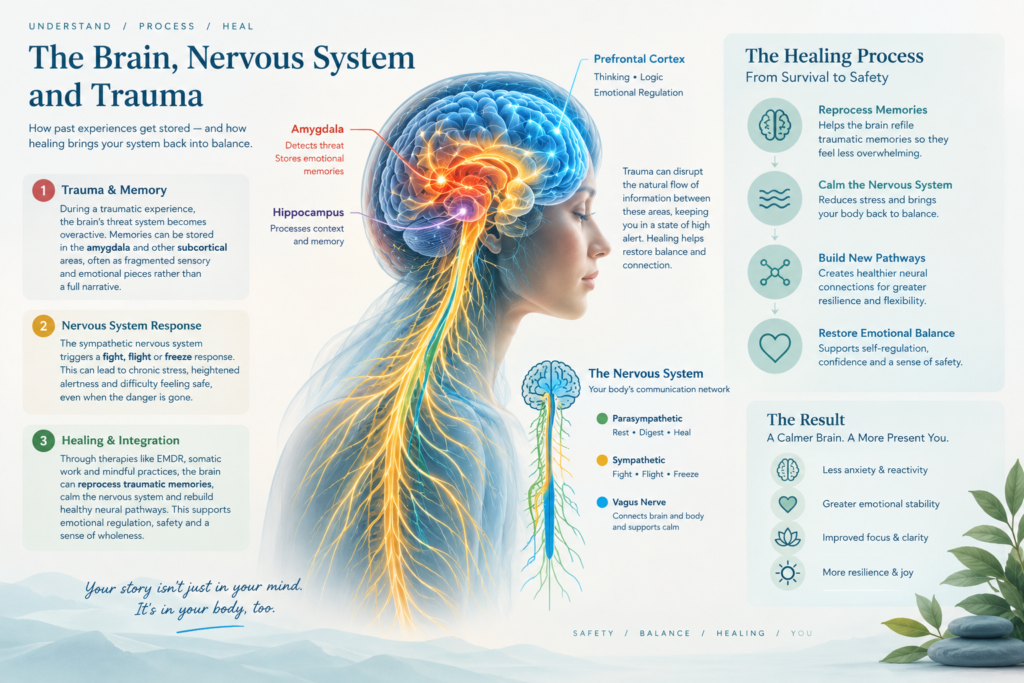
How Does EMDR Therapy Work in the Brain and Nervous System?
Here’s where things get fascinating! EMDR isn’t magic, though the results can feel remarkable. It works alongside your brain and nervous system’s natural healing abilities.
Understanding the Adaptive Information Processing Model
EMDR is built on something called the Adaptive Information Processing model. In plain terms, this model says your brain naturally wants to heal, just like your body heals a scraped knee. Most experiences get processed and stored without a problem. But when something overwhelming happens, the processing can stall. EMDR helps restart that natural healing so the memory can finally settle into place.
Why Traumatic Memories Can Feel Like They Are Happening Again
Have you ever been caught off guard by a memory that felt shockingly real, as if it were happening right now? That’s because unprocessed traumatic memories are often stored with all their original intensity. Your brain hasn’t had the chance to mark them as “over.” So a sound, a smell, or a passing thought can suddenly pull you back, body and all.
How EMDR Supports Trauma Processing and Emotional Regulation
As you reprocess memories through EMDR, their emotional grip tends to loosen. You start to feel steadier. Situations that once sent you spinning become easier to handle. Over time, many people notice they can stay calm and grounded in moments that used to overwhelm them.
The Connection Between Triggers, Emotional Responses, and Memory
Triggers are reminders that set off strong emotional or physical reactions. They’re linked directly to how a memory is stored. When EMDR helps reprocess the underlying memory, those triggers often lose their power. The reminder might still appear, but the intense reaction fades.
What Research Says About How EMDR Works
Researchers are still exploring exactly why EMDR is so effective, but studies consistently show it helps reduce trauma symptoms. One leading theory connects bilateral stimulation to the way your brain processes information during REM sleep, the dreaming stage when your mind sorts through the day. Whatever the precise mechanism, the evidence for its benefits is strong.
What Happens During an EMDR Therapy Session?
Wondering what to expect? Knowing the steps ahead of time can ease a lot of nerves. EMDR follows a clear, organized path designed to keep you safe and supported every step of the way.
The Eight Phases of EMDR Treatment
EMDR unfolds across eight phases. You won’t rush through all of them in one sitting! Your therapist moves at a pace that feels right for you.
History Taking, Treatment Planning, and Preparation
In the early phases, your therapist gets to know you, your history, and your goals. Together, you create a plan. Your therapist also teaches you grounding and calming techniques, so you feel equipped and secure before any deeper work begins.
Assessment, Desensitization, and Installation
Next, you identify a specific memory to focus on, along with the feelings and beliefs tied to it. During desensitization, you briefly hold that memory in mind while bilateral stimulation helps your brain reprocess it. Then comes installation, where you strengthen a positive, healthier belief to replace the painful one.
Body Scan, Closure, and Reevaluation
Trauma lives in the body too, so your therapist guides a body scan to notice and release any leftover tension. Closure makes sure you leave each session feeling calm and stable. At your next visit, reevaluation checks in on your progress and decides what to tackle next.
What Bilateral Stimulation Feels Like During a Session
Many people are surprised by how simple and gentle bilateral stimulation feels. You might follow your therapist’s fingers with your eyes, hold small buzzing devices, or listen to soft alternating tones. There’s nothing uncomfortable about it. Most clients describe it as relaxing, even soothing.
How Therapists Help Clients Feel Safe During Trauma Processing
Your safety and comfort come first, always. A skilled trauma therapist builds trust before diving into hard memories, teaches you tools to stay grounded, and watches closely for signs you need a break. You’re never pushed faster than you’re ready to go. This supportive foundation is what makes the deeper work possible.

What Are the Benefits of EMDR Therapy for Trauma Recovery?
So what can EMDR actually do for you? Quite a lot! While everyone’s journey looks different, these are some of the most common benefits people report.
Reducing the Emotional Distress Associated With Traumatic Memories
One of the biggest gifts of EMDR is relief. Memories that once brought tears, panic, or dread often become much easier to hold. You can think about the past without being swept away by it.
Managing Trauma Triggers and Improving Emotional Regulation
As your memories reprocess, everyday triggers tend to lose their sting. Many people find they react less strongly to stress and bounce back more quickly. That steadier, calmer feeling can ripple into every part of life.
Building a Greater Sense of Safety, Confidence, and Self-Connection
Trauma can chip away at how you see yourself. EMDR helps rebuild a sense of safety and self-worth. Clients often describe feeling more like themselves again, more confident, more present, and more connected to the people they love.
Processing Trauma Without Relying Entirely on Verbal Retelling
Here’s something many people find comforting: you don’t have to describe every painful detail out loud. For anyone who feels overwhelmed by retelling their story, EMDR offers a gentler way to heal. Your brain does much of the processing internally.
Who Can Benefit From EMDR Therapy?
EMDR helps a wide range of people. You don’t need a specific diagnosis to benefit, though it’s especially powerful for certain experiences.
People Experiencing Unresolved Childhood or Relationship Trauma
If old wounds from childhood or past relationships still affect you today, EMDR can help you process and release them. Healing is possible, no matter how long ago the hurt began.
Adults Living With PTSD, Anxiety, or Persistent Trauma Triggers
For adults dealing with PTSD, ongoing anxiety, or triggers that disrupt daily life, EMDR offers a well-supported path forward. It’s designed to tackle exactly these kinds of struggles.
People Who Feel Stuck Despite Previous Talk Therapy
Have you tried talk therapy but still feel stuck? You’re not alone, and it’s not your fault. Sometimes memories need a different kind of processing. Many people find EMDR helps them move past plateaus they couldn’t get through before.
When EMDR May Need to Be Adapted or Delayed
EMDR isn’t one-size-fits-all. For some people, especially those in active crisis or facing certain health conditions, your therapist may adapt the approach or build more stability first. That careful, personalized planning is part of what keeps EMDR safe and effective.
Is EMDR Therapy Effective and What Are Its Limitations?
Let’s be honest and clear-eyed about what EMDR can and can’t do. Its track record is impressive, but no single therapy is perfect for everyone.
What Clinical Research Says About EMDR for PTSD
Decades of research support EMDR as an effective treatment for PTSD. It’s endorsed by respected organizations and is recommended as a first-choice therapy for trauma. Studies show many people experience meaningful, lasting relief.
How EMDR Compares With Other Trauma-Focused Therapies
EMDR is one of several excellent trauma treatments. The best choice depends on you, your needs, and your preferences.
EMDR vs. Cognitive Processing Therapy
Cognitive Processing Therapy focuses on examining and shifting unhelpful thoughts about a trauma. It involves more writing and discussion. EMDR, by contrast, leans on your brain’s natural reprocessing and requires less verbal detail. Both are effective; the right fit varies from person to person.
EMDR vs. Trauma-Focused Cognitive Behavioral Therapy
Trauma-Focused Cognitive Behavioral Therapy blends talk therapy with coping skills and gradual exposure to difficult memories. It’s especially well-studied for children and teens. EMDR offers a different pathway that many adults find appealing because it doesn’t center on extensive retelling.
Possible Emotional Challenges and Temporary Discomfort During Treatment
Healing isn’t always smooth. As memories surface and reprocess, you might feel more emotional for a short time, or notice vivid dreams between sessions. This is usually temporary and a sign that healing is underway. A good therapist prepares you for this and gives you tools to cope.
Why Individual Results and Treatment Timelines Vary
Everyone heals at their own pace. The nature of your experiences, your support system, and your overall health all shape your journey. There’s no “right” timeline, only the one that’s right for you.
How Long Does EMDR Therapy Take to Work?
This is one of the most common questions, and the honest answer is: it depends! Still, we can offer some helpful guideposts.
How Many EMDR Sessions Might Be Needed?
For a single, recent trauma, some people see relief in just a handful of sessions. For more complex or longstanding trauma, treatment may take several months. Your therapist will give you a clearer picture once they understand your situation.
What Influences the Length of Trauma Treatment?
Several factors shape how long EMDR takes, including the number and depth of experiences you’re processing, your coping resources, and whether you’re navigating current stressors. More complex histories naturally take more time to work through.
How to Recognize Progress During EMDR Therapy
Progress can be subtle at first! You might notice you sleep better, react less to triggers, or think about a once-painful memory and feel calm. These small shifts add up to real, lasting change.
Why Trauma Recovery Is Different for Everyone
Your story is uniquely yours, and so is your path to healing. Comparing your progress to anyone else’s isn’t helpful. Trust the process, lean on your therapist, and give yourself grace along the way.
How to Choose a Qualified EMDR Therapist in Florida
Finding the right therapist makes all the difference. A little homework up front helps you land in caring, capable hands.
What EMDR Training and Certification Should You Look For?
Look for a therapist who has completed EMDR training through a recognized program. Some go further and become EMDR-certified, which means extra training and supervised experience. Both are good signs that you’re working with someone qualified to guide your healing.
Questions to Ask Before Starting EMDR Therapy
Never hesitate to ask questions before you begin! A trustworthy therapist welcomes them.
Is the Therapist EMDR-Trained or EMDR-Certified?
Ask directly about their EMDR training. Where did they train? Are they certified? How long have they practiced EMDR? Clear answers here help you feel confident in their expertise.
Does the Therapist Have Experience With Your Type of Trauma?
Trauma comes in many forms. Ask whether the therapist has worked with experiences like yours, whether that’s childhood trauma, grief, anxiety, or PTSD. Experience with your specific concerns can make your work together smoother and more effective.
Finding Trauma-Informed EMDR Therapy in South Florida
If you live in South Florida, you have options! Search for trauma-informed EMDR providers in your area, ask your doctor for referrals, or reach out to local mental health practices. A trauma-informed therapist understands how deeply experiences affect you and treats you with extra care and respect.
What to Expect From an Initial EMDR Consultation
Your first meeting is really about connection. You’ll talk about what brought you in, your goals, and any questions you have. The therapist will explain how EMDR works and whether it’s a good fit. There’s no pressure to dive into hard memories right away. It’s simply a chance to see if you feel comfortable moving forward.

How Much Does EMDR Therapy Cost?
Let’s talk money, because cost matters and you deserve straight answers. EMDR pricing varies, but understanding the basics helps you plan.
Factors That Influence the Cost of EMDR Sessions
Session fees depend on your therapist’s experience, credentials, location, and session length. Providers in larger cities or with specialized training may charge more. Online sessions sometimes cost less than in-person visits.
Private-Pay EMDR Therapy and Out-of-Network Insurance Reimbursement
Some therapists accept insurance directly, while others operate on a private-pay basis. If your therapist is out-of-network, you may still get reimbursed. Ask for a “superbill,” a receipt you can submit to your insurance company for possible partial reimbursement. It’s always worth checking your plan’s mental health benefits.
Questions to Ask About Fees and Payment Options
Before starting, ask about the fee per session, accepted payment methods, and whether sliding-scale rates are available. Some therapists offer reduced fees based on need. Getting clear on costs early helps you focus fully on healing.
Frequently Asked Questions About EMDR Therapy
Still have questions? You’re in good company! Here are some of the most common ones we hear.
Is EMDR Therapy Safe for People With Unresolved Trauma?
Yes. EMDR is designed specifically for unresolved trauma, and safety is built into every phase. Your therapist prepares you with grounding skills before any deep work and moves at a pace that protects your well-being.
Do You Have to Talk About Your Trauma During EMDR?
Not in great detail. This is one of EMDR’s biggest comforts! You’ll share enough for your therapist to help, but you don’t have to narrate every painful moment. Much of the processing happens internally.
Can EMDR Therapy Change or Erase Memories?
No, EMDR doesn’t erase your memories. You’ll still remember what happened. What changes is the emotional charge. The memory becomes less painful and no longer controls how you feel.
Can EMDR Make Trauma Symptoms Worse at First?
Some people feel a temporary uptick in emotions as memories reprocess. This is usually short-lived and a normal part of healing. Your therapist equips you with coping tools and checks in regularly to keep you supported.
Is EMDR Therapy Available Online?
Yes! Many therapists offer EMDR through secure video sessions, using digital tools for bilateral stimulation. Online EMDR can be just as effective and offers wonderful flexibility, especially if getting to an office is tricky.
How Do You Know When You Are Ready for EMDR?
If painful memories are affecting your daily life, relationships, or sense of peace, you may be ready to explore EMDR. The best way to know for sure is to talk with a qualified trauma therapist who can help you decide together.
Finding Your Way Back to Yourself Through Trauma-Informed EMDR Therapy
Healing from trauma isn’t about forgetting what happened. It’s about reclaiming your life, your calm, and your sense of who you are. EMDR offers a gentle, proven path to get there.
Taking the First Step Toward Healing and Emotional Safety
The first step is often the hardest, and the bravest. Simply reaching out for support is a powerful act of self-care. You don’t have to carry the weight alone, and you don’t have to have everything figured out before you begin.
Exploring EMDR Therapy With a Qualified Trauma Therapist
If you’re curious about EMDR, consider connecting with a qualified, trauma-informed therapist in your area. Ask your questions, share your story at your own pace, and see how it feels. Healing is possible, relief is real, and the version of yourself you’ve been missing is closer than you think. You deserve that peace, and taking this gentle first step can help you find your way back.